

CVC Secondary Partners closed its sixth flagship secondaries fund at $10 billion on September 3, nearly double its $5.8 billion predecessor and more than triple the vehicle before that, a raise big enough that CVC’s own chief is using it to argue the standalone secondaries boutique no longer has a place at the top of the market.

The headline number, and how fast it grew
CVC Secondary Partners, the secondaries arm CVC built by acquiring Glendower Capital, a deal announced in September 2021 and closed in 2022, confirmed the final close of Secondary Opportunities Fund VI (”SOF VI”) on September 3, with aggregate capital commitments of $10 billion. That compares with $5.8 billion for the fifth SOF fund in 2023 and $2.7 billion for the fourth in 2019, according to CVC’s own release. The fundraise drew more than 200 returning and new institutional LPs, with roughly half of the capital coming from investors new to the SOF platform.
The pace of that growth is the real story. As recently as the third quarter of 2026, SOF VI was being tracked in the market at $7 billion, already 38% ahead of its predecessor and reported as a target the fund was on track to top. By CVC’s half-year results in July, the fund had reached $9.3 billion. The final $10 billion print means the fund grew roughly 43% past that original $7 billion marker before closing, a size trajectory this newsletter flagged as one of two “near-record” secondaries closes worth watching back in the August 23 media sweep, alongside Adams Street’s Global Secondary Fund 8.

What SOF VI actually buys. CVC describes the strategy as "two-pronged": LP fund-portfolio secondaries alongside GP-led transactions, targeting buyout fund investments managed by what the firm calls high-quality GPs in the private equity secondaries mid-market. It's explicitly a diversified, balanced-portfolio approach rather than a concentrated single-asset or thematic bet — the same mid-market segment that boutique specialists like Capital Dynamics (covered in this newsletter's August 31 deep dive) also target, though from a very different scale and platform position.
“The days of the exciting standalone boutique... are over”
Carlo Pirzio-Biroli, who heads CVC’s secondaries strategy and previously ran Glendower before the acquisition, framed the close around platform scale rather than fund performance metrics.
"There's a massive opportunity set as well, with several trillions of capital trapped in unsold private equity holdings."
Carlo Pirzio-Biroli, Head of CVC Secondary Partners, to Bloomberg
"The days of the exciting standalone boutique at the higher end of the market are over. There's a premium to being part of a larger platform, which gives you an edge in sourcing, originating and executing deals."
Carlo Pirzio-Biroli, to Bloomberg
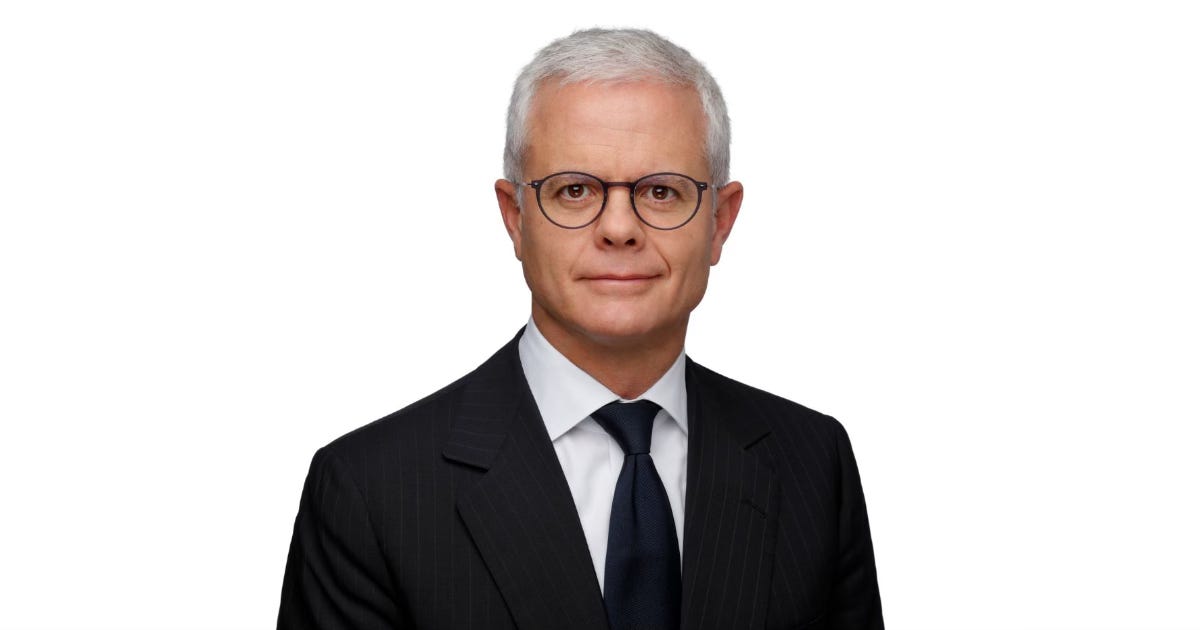
CVC CEO Rob Lucas tied the raise directly to platform breadth in the firm’s own release, noting that secondaries now sit inside €212 billion of group-wide AUM across seven strategies, and flagged credit and infrastructure secondaries as the next adjacencies CVC intends to scale into — a roadmap CVC Secondary Partners had already begun executing when it launched a dedicated credit secondaries platform in November 2025.
The platform-versus-boutique fight this newsletter has been tracking all month
Pirzio-Biroli’s framing lands directly on top of a tension this newsletter has already been documenting from multiple angles in August. PitchBook’s reporting on buyout shops building in-house GP-led secondaries units, TPG, Warburg Pincus, Leonard Green, Accel-KKR, New Mountain, H.I.G., drew a pointed rebuttal from Coller Capital’s Jon McEvoy, who called the speed-to-price pitch “a little bit of a spin.” Partners Group’s own secondaries platform, profiled here on August 23, makes the opposite case for scale: four verticals, a 97% deal-decline rate, and $9 billion-plus raised for its own eighth PE secondaries vintage in April. Now CVC, a buyout major that built its secondaries arm by buying a boutique rather than growing one organically, is making the platform argument from the buyer side of the market, aimed squarely at firms like Capital Dynamics that are betting the opposite: that staying small, specialized and off the mega-deal auction track is itself the edge.
Both arguments can be true for different segments of the same market. But a $10 billion mid-market fund from a €212 billion parent platform, closing in the same month CVC confirms plans to push further into credit and infrastructure secondaries, is a concrete data point in favor of consolidation, one more log on a fire this newsletter has already been watching build via the EQT/Coller and Lazard/Campbell Lutyens deals.
Where this sits against the broader market
SOF VI’s close lands against a backdrop this newsletter has tracked closely: Evercore’s H1 2026 Secondary Market Review put total global secondaries volume at a record $121 billion for the half, with roughly $194 billion of dry powder sitting behind it, a market where LPs, per Rede Partners’ record-high secondaries sentiment reading, are actively rotating more capital toward the strategy specifically because of its ability to return cash faster than a traditional buyout fund’s J-curve. A $10 billion flagship close, with half the capital from LPs new to the platform, is a direct expression of that same demand finding a home with an established, brand-name-backed manager rather than a new entrant.
Some Extra Thoughts
The number that will get quoted is $10 billion. The number worth sitting with is the roughly 72% jump from SOF V to SOF VI, on top of a more than doubling from SOF IV to SOF V three years earlier, two consecutive step-changes in size for a strategy CVC didn’t build in-house at all, but bought. That’s a useful data point against the “buyout shops building secondaries from scratch” story running elsewhere in the market: CVC’s approach was acquisition, not construction, and it’s now the platform’s fastest-scaling secondaries close on record.
Pirzio-Biroli’s “boutique era is over” line is also worth remembering the next time a smaller, specialized secondaries manager closes a smaller, specialized fund and frames it as a deliberate strategic choice rather than a ceiling. Both framings are self-serving in the way that fundraising commentary always is. The market will decide which one is actually right, likely by continuing to do both at once for a while yet.
Sources: CVC Capital Partners, "CVC Secondary Partners raises $10 billion for its sixth global secondary private equity fund," press release, September 3, 2026 (cvc.com) · Swetha Gopinath, "CVC Raises $10 Billion for Its Largest-Ever Secondaries Fund," Bloomberg, September 3, 2026 · Secondaries Investor, "CVC aims for Q3 close for 6th secondaries fund," July 2026 · SecondaryLink, "CVC's sixth secondary fund tops $7 billion target as fundraising continues" · CVC Capital Partners, "CVC and Glendower Capital to establish a strategic partnership in secondaries," September 13, 2021 · Prior Secondary Scoop coverage: "Record Money, Same Month" (media sweep, Aug 23), "Partners Group Has Quietly Built the Most Complete Secondaries Platform in the Market" (Aug 23), "Capital Dynamics: Secondaries Strategy Deep Dive" (Aug 31).
Scale is the right read on the fundraise, and it is worth naming what the capital is actually clearing. Secondaries did $120 billion in the first half of 2026, 20% above the previous record, with continuation funds at 86% of GP-led volume, per PitchBook on 21 July. That is not a market discovering a new asset class. That is an exit backlog needing a bid, against Bain's count of roughly 32,000 unsold portfolio companies. The boutique argument is downstream of that. Boutiques did not lose on capability. They lost on the size of the cheque this backlog now requires, and on being able to write it without a syndicate that gets a vote on price.