

Molten Ventures, the FTSE Small Cap–listed European venture capital firm, has announced the formation of a dedicated secondaries investment team — one of the clearest signals yet that the European venture secondary market has matured enough to warrant specialist, institutionalized infrastructure.
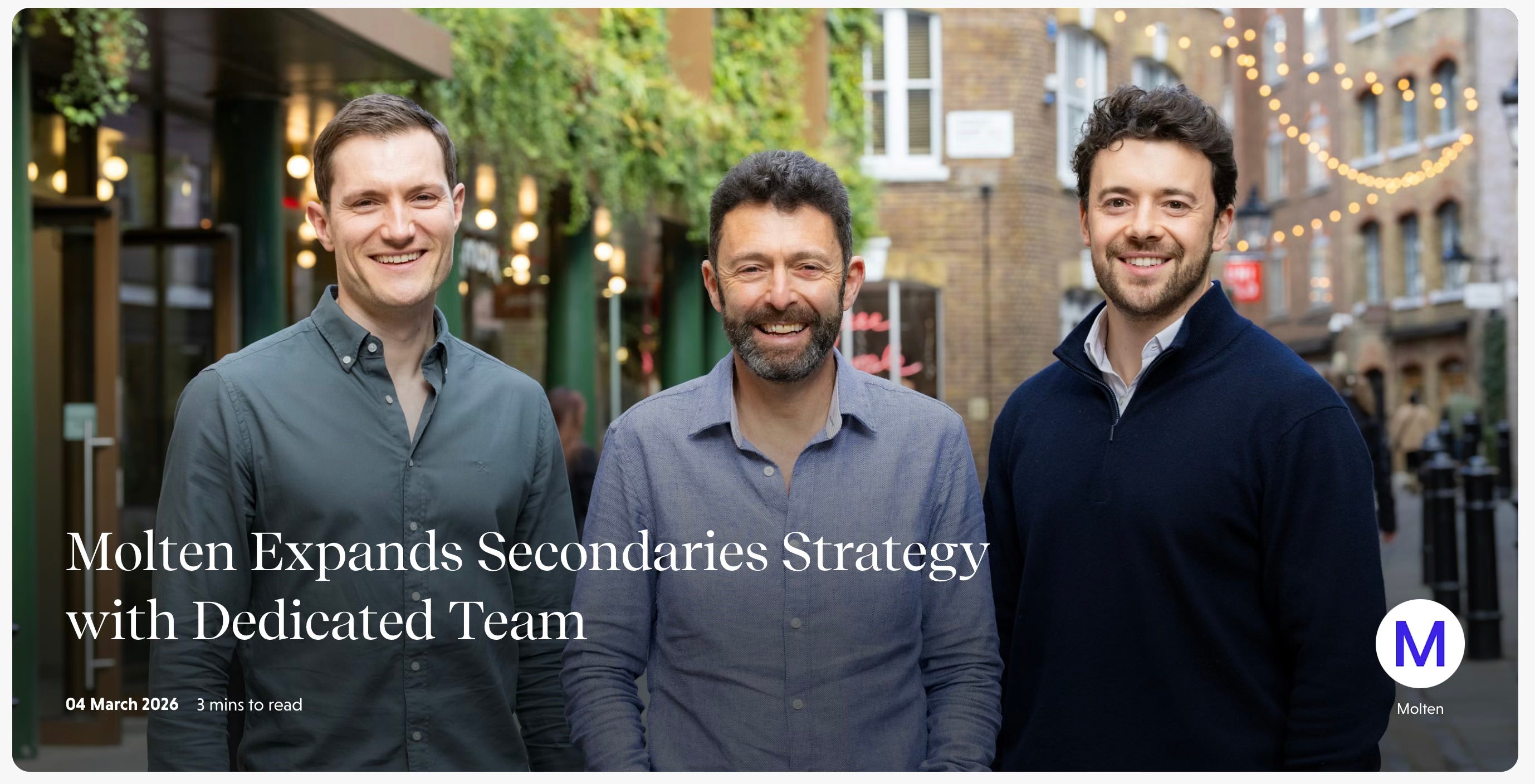
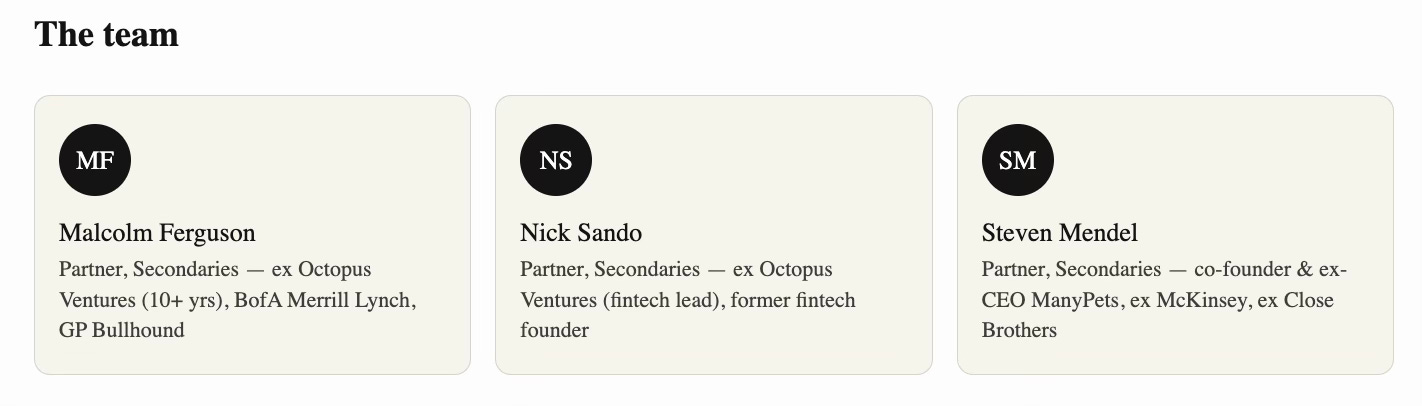
Three partners have been hired to lead the effort: Malcolm Ferguson and Nick Sando, both from Octopus Ventures, and Steven Mendel, co-founder and former CEO of unicorn pet insurer ManyPets. Their mandate is to raise a new third-party secondary fund that will co-invest alongside Molten’s own balance sheet, deepening origination across the European venture ecosystem.
“Molten is in a unique position to take our work in secondaries to the next level... focusing on great businesses that are a little further along in their journeys.”
— MALCOLM FERGUSON, PARTNER, SECONDARIES, MOLTEN VENTURES
Why this matters for the secondary market
Molten is not a newcomer to secondaries. The firm has been systematically acquiring stakes in mature venture portfolios — including Seedcamp Funds I, II & III, Earlybird DWES Fund IV, Earlybird Digital East Fund I, Connect Ventures Fund I, and most recently a majority stake in the Speedinvest Continuation Fund I — with the strategy delivering a 2.5x MOIC to date.
What is new is the institutionalisation: moving from balance-sheet opportunism to a purpose-built team with third-party capital. This structural shift matters. It implies deal sourcing at greater scale and speed, a dedicated LP base with a secondaries-specific risk-return profile, and more consistent pricing discipline in a market that has historically been fragmented.

The structural opportunity they’re targeting
The thesis is straightforward and well-evidenced: as private companies remain private for longer, the population of founders, early employees, and seed-stage investors sitting on illiquid positions has grown substantially. Secondaries provide a mechanism to address that without forcing premature exits or disrupting company operations.
Molten’s edge in this space is network depth. Having backed or co-invested alongside companies such as Revolut, Trustpilot, and UiPath, the firm sits at the centre of a dense web of GP and founder relationships — precisely the kind of proprietary deal access that determines outcomes in a market where the best transactions rarely surface through intermediaries.
CEO Ben Wilkinson framed the move as a natural extension of Molten’s core platform: a way to access high-quality, later-stage assets with more immediate paths to liquidity, while remaining complementary to its primary Series A and B activity.
“Secondaries are an important part of our platform... Building a dedicated team to leverage our existing platform is a natural next step as we scale this capability.”— BEN WILKINSON, CEO, MOLTEN VENTURES
What to watch
The key question is fund size and LP composition. A co-investment vehicle alongside the Molten balance sheet suggests a fund calibrated for mid-market deal flow — likely targeting individual company stakes and tail-end fund portfolios in the £10–50M range per transaction. Whether Molten positions this as a direct competitor to specialist platforms such as Isomer Capital or Whitehorse Liquidity Partners, or as a complementary access point for LPs already in the Molten ecosystem, will define how the market receives it.
The announcement also adds further evidence to a broader trend: European venture secondaries are no longer a niche afterthought. They are becoming a category in their own right, attracting senior talent and dedicated capital structures — and Molten’s move is likely to accelerate that conversation across the continent.